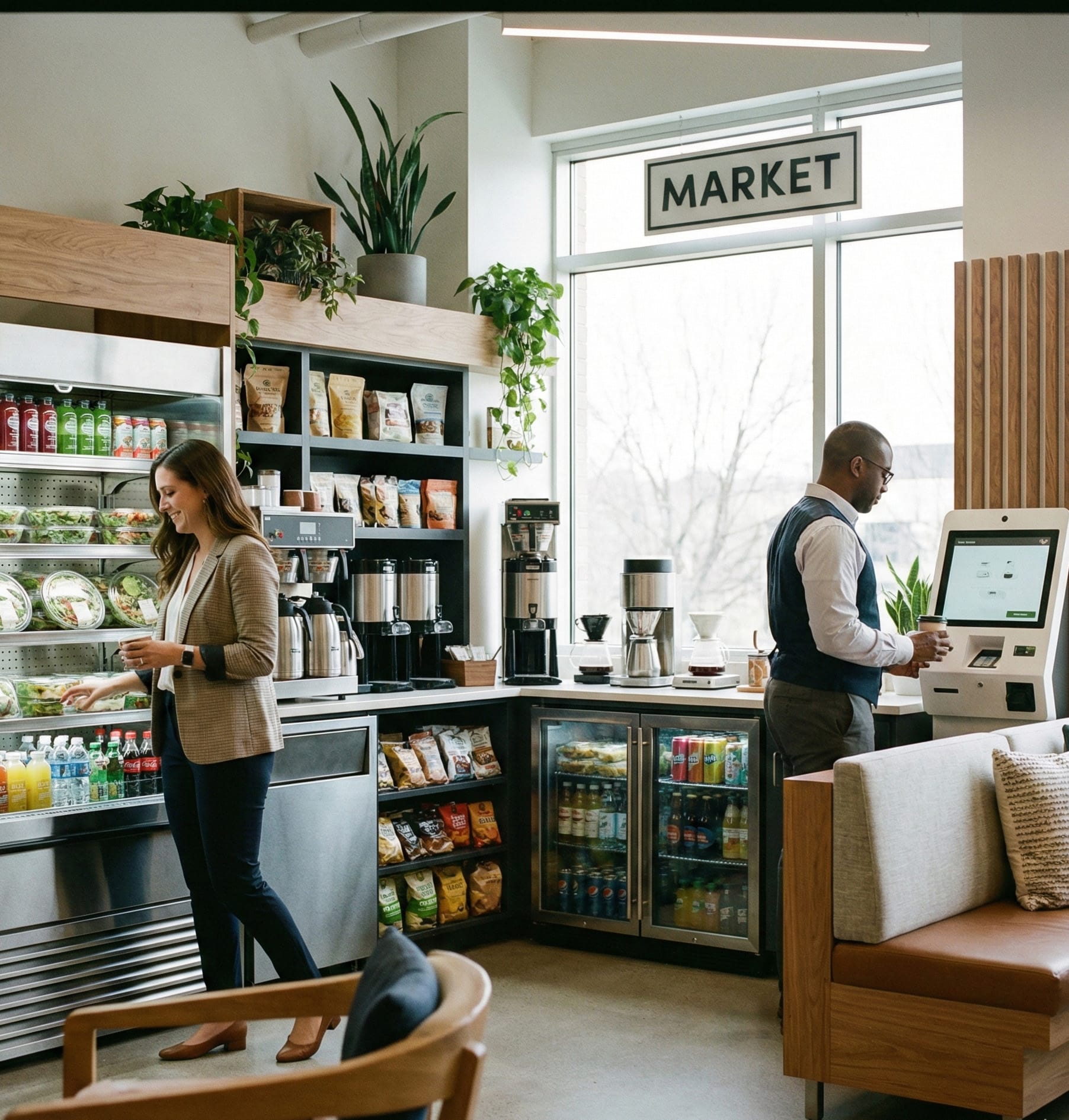
The breakroom has changed more in the last five years than in the previous twenty, and the biggest reason is the micro-market. What used to be a row of vending machines and a coffee pot is now, increasingly, a small in-office convenience store stocked with fresh meals, healthier snacks, premium beverages, and a self-checkout kiosk. For Boston employers competing for talent and managing hybrid schedules, the upgrade has become one of the most practical perks available.
Here is why micro-markets are taking off, what the data says, and how American Food & Vending is bringing the format to workplaces across Boston and New England.
Micro-markets are the fastest-growing segment in workplace refreshment
Industry data tells a clear story. According to the NAMA Foundation’s 2022-2023 industry census, micro-market revenue grew from $2.4 billion in 2019 to an estimated $5.4 billion in 2023, more than doubling in four years. The segment’s share of total convenience services revenue jumped from 9% to 20% over the same period.
The growth has not slowed. There are now over 30,000 active micro-market locations in the U.S., with the segment continuing to expand at roughly 10-12% annually. Boston specifically has been a strong market, helped by a dense corridor of life sciences, financial services, and tech employers who treat the breakroom as part of the recruiting pitch.
Why employees prefer the format
The appeal is straightforward. A traditional vending machine carries about 40 products. The average micro-market carries 150 to 400, including fresh sandwiches, salads, frozen meals, dairy, premium snacks, and better-for-you options that simply do not fit in a coil-based machine.
That variety changes how employees use the space. Average ticket sizes in micro-markets run $4-$7 per transaction compared to $1.30-$2.10 for vending, because employees are buying real meals rather than a quick snack. Cashless payment is now nearly universal in the format, with over 95% of micro-market transactions running cashless through tap-to-pay, mobile wallets, and account-based systems.
For employers, the practical effect is fewer employees leaving the building at lunch, less complaining about limited options, and a breakroom that finally matches the quality of the rest of the office.
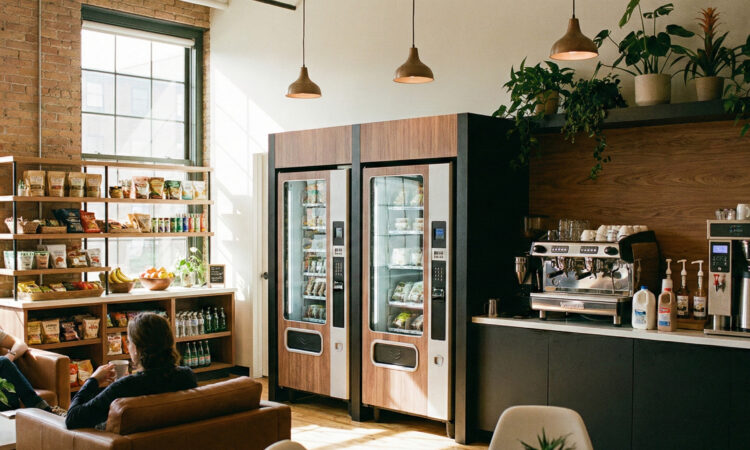
What AFV’s micro-market service includes
AFV’s micro-market service is designed around how Boston offices actually operate. Each market is custom-built for the space and headcount, with open shelving, glass-front coolers, freezers for frozen meals and ice cream, and a self-checkout kiosk that handles tap-to-pay, mobile wallets, and account-based payment.
The product mix is curated and rotated, with a deliberate emphasis on fresh, healthier, and locally relevant options alongside familiar favorites. Behind the scenes, AFV’s route and inventory technology keeps the market stocked, monitors expiration dates, and flags issues before employees notice them.
For larger campuses, micro-markets often pair with office coffee service, filtered water and hydration, and pantry programs to create a complete in-office experience. The full lineup of AFV’s service offerings can be combined to fit the space and budget.
Sustainability and operational benefits
The format is also more efficient than the equipment it replaces. Micro-markets typically use modern open-cooler technology and smart kiosks instead of the heavy refrigeration motors found in older vending machines, which lowers energy consumption. AFV pairs the equipment with green business practices such as compostable packaging, energy-efficient coolers, and reduced delivery routing through telemetry-driven restocking.
For facilities teams, that means fewer service tickets, less product waste, and a sustainability story that lines up with most corporate ESG commitments.
A local partner with 45+ years in New England
Micro-market service depends heavily on the operator. The kiosk is only as good as the team restocking it, replacing expired items, and responding when something needs attention. AFV has been serving Boston and New England as a 100% independent, American-owned company for over 45 years, with local routes and dedicated account teams across Boston, Cambridge, Quincy, Providence, Hartford, and the surrounding service area.
Ready to bring a micro-market to your Boston office?
If your current breakroom is showing its age, a micro-market is one of the highest-impact upgrades available in 2026. The format works for offices, manufacturing facilities, life sciences campuses, and hybrid workplaces of nearly any size.
Request a consultation with American Food & Vending to walk through your space, headcount, and goals. The team will recommend the right size and product mix, handle the install, and keep the market running so your facilities team does not have to.